Pentax KM Review: Is It Still Worth Buying in 2026?
By Andrea Ross
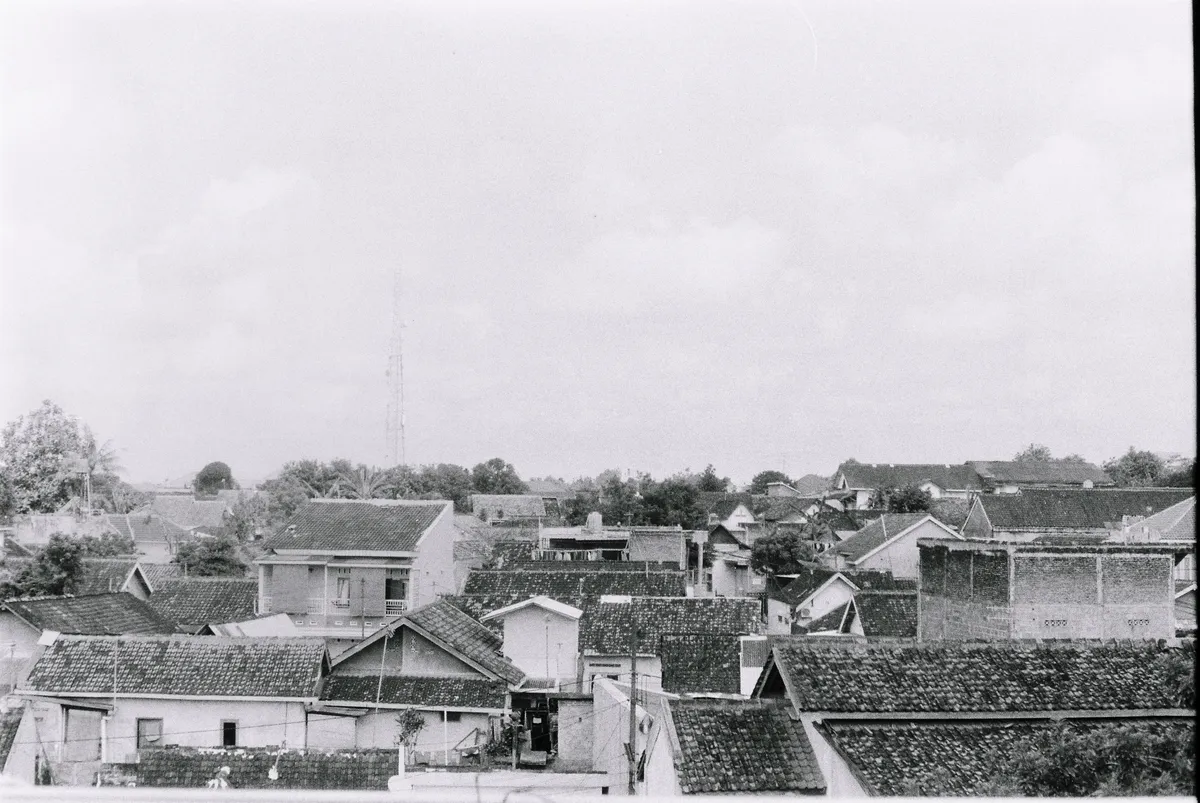
The Pentax KM is the body I actually reach for most often, paired with the SMC Pentax-M 40mm f/2.8 pancake or the 50mm f/1.4. It’s a camera from the mid-1970s, which raises the obvious question for anyone shopping today: is a 50-year-old SLR actually a sensible buy in 2026, or just a nostalgia piece? Here’s where it stands after real use.
Why review a 1970s camera in 2026
The used film camera market has shifted a lot in the last few years. Prices on well-known “starter” bodies — the Pentax K1000 especially — have climbed as film photography’s resurgence has pulled in a wave of new, mostly younger shooters. That demand has pushed buyers toward less hyped but mechanically similar alternatives, and the KM is one of them: same K-mount lens ecosystem, same era of build quality, usually a noticeably lower price simply because it doesn’t have the K1000’s name recognition.
That makes it worth a serious look rather than a footnote. It’s not a collector’s curiosity — it’s a genuinely usable, fully mechanical-feeling camera that happens to be older than most of the people buying it.
First impressions and handling
The KM sits in the middle of Pentax’s mid-1970s K-mount lineup: heavier and more deliberate-feeling than a stripped-down student camera, but nowhere near the bulk of a pro body from the same era. With a 50mm f/1.4 attached it comes in right around 887g, and the body alone is about 622g — enough heft to feel solid in hand without becoming tiring to carry all day.
Two features separate it from the more famous K1000: a depth-of-field preview lever and a self-timer, neither of which the K1000 has. They’re small additions, but they matter if you actually want to check focus falloff before committing a frame, or get yourself into a shot occasionally.
In practice, I reach for the KM specifically for the depth-of-field preview lever. Most of what I shoot with it is tight urban framing — rooftops, alleyways, architectural details around Singapore — where I actually want to see what falls out of focus before committing a frame, not guess from the hyperfocal markings on the lens barrel. The self-timer gets used far less, mostly for the odd self-portrait when I want myself in a frame without asking a stranger to hold the camera. What sold me on the body itself, though, is simpler: the shutter has a genuinely satisfying, mechanical feel — no motor whir, no half-press hesitation, just a clean, direct click that tells you exactly what happened.
The meter: how it holds up today
The KM uses a match-needle, center-weighted TTL meter built around CdS metering cells, reading light through the lens with the aperture held open. The viewfinder shows a needle you center against a fixed mark — no digital readout, no blinking warning icons, just a mechanical needle telling you whether you’re under, over, or on target.
CdS cells are the real question mark on any camera this old. They’re known to drift with age, and unlike modern silicon cells, they can also show a “memory effect” where a recent bright or dark reading briefly skews the next one. A meter that’s 50 years old deserves a skeptical eye before you trust it blind.
Mine still tracks close enough to trust for everyday shooting. I check it against the light-meter app on my phone every few rolls, and against Sunny 16 on obviously bright days as a second sanity check. The two rarely disagree by more than about a third of a stop, which is well within what negative film’s exposure latitude can absorb without a visible difference on the scan. I wouldn’t trust a meter this old blind on a camera I hadn’t verified at all — but a quick side-by-side check before a shoot, especially right after buying used, takes two minutes and tells you everything you need to know.
Lens mount compatibility
This is where the KM earns a lot of its practical value: it uses the Pentax K-mount, introduced specifically with this generation of Pentax SLRs as a bayonet replacement for the older M42 screw mount. That means the entire SMC Pentax-M lens line — including the 40mm f/2.8 pancake and 50mm f/1.4 covered elsewhere on this site — mounts natively, with full aperture-ring control and no adapter required.
M42 lenses (including older Super Takumar glass, also part of my own kit) still mount with a simple, inexpensive M42-to-K adapter, though you lose auto-aperture coupling and shoot stopped-down. For a buyer, this matters because it means a KM isn’t a dead end — it’s a gateway into two full generations of affordable, well-built Pentax glass, not just whatever came in the original kit box.
Sample shots
A few frames from recent rolls on the KM, paired with the SMC Pentax-M lenses:
- Rooftops (hero image above) — 50mm f/1.4 at f/8, roughly 1/250s, Kodak Gold 200. Stopped down for depth across the frame rather than shooting the lens wide open — this is the DOF preview lever earning its keep.
- Sunrise at the station — 40mm f/2.8 pancake at f/4, around 1/60s handheld, Ilford HP5 Plus. Low pre-dawn light, close to the edge of what I’d trust the meter alone for — I metered off the sky rather than the platform to avoid underexposing the whole frame.
- National Gallery, Singapore — 50mm f/1.4 at f/5.6, 1/125s, Kodak Gold 200. Bright midday light, close to a textbook Sunny 16 exposure, which is exactly why I used this frame as the meter-accuracy check earlier in this review.
- Sailing at the bay — 40mm f/2.8 pancake at f/8, 1/500s, Kodak UltraMax 400. Fast enough shutter to freeze the boats without needing to push the film.
Who should buy one vs. who should skip it
The KM makes the most sense for someone who wants to actually learn manual exposure properly rather than lean on a fully automatic point-and-shoot. Full manual control, a meter that requires you to read and respond to it instead of trusting a black box, and a straightforward mechanical shutter all push a new shooter toward understanding exposure rather than around it.
It’s a worse starting point for someone who wants aperture-priority or program modes to fall back on — the KM doesn’t offer either. And it’s not the pick for someone chasing a specific “famous” model for its own sake; if name recognition or resale value matters more than the shooting experience, the K1000 remains the more recognizable choice, at a real price premium for a very similar experience underneath.
Where to find one and realistic pricing
KMs show up regularly on the usual used-camera channels — dedicated secondhand camera shops, camera-specific marketplaces, and general listing sites — usually priced below comparable K1000 listings for a body in similar condition, precisely because it’s less searched-for by name. As with any 50-year-old mechanical camera, condition matters more than the badge: check shutter speeds across the full range (not just 1/125), confirm the meter at least roughly matches a known-good reading, and inspect the light seals, which are almost always due for replacement on a camera this age regardless of what a seller claims.
I paid 45 SGD for mine, body only, from one of the secondhand camera stalls at Peninsula Plaza in Singapore — well below what a comparable-condition K1000 was going for at the same stall that week. The meter was already tracking accurately when I checked it in-store against my phone, which made the price feel like a genuine bargain rather than a gamble.
Verdict
The Pentax KM is a genuinely capable, fully mechanical K-mount SLR that gets overlooked mostly because it isn’t the K1000 — not because it does anything worse. For a buyer who wants full manual control, a usable meter (once verified), and direct access to the SMC Pentax-M lens catalog without paying a name-recognition premium, it’s one of the stronger value picks in the current used film camera market.
I’d tell a total beginner to buy this, not just someone shopping for a second body. The learning curve is identical to the K1000’s — same manual-everything experience — and the DOF preview lever is genuinely useful while you’re still building an intuition for aperture and depth of field, not a feature you’ll grow into later. Unless resale value or name recognition specifically matters to you, I don’t see a compelling reason to pay the K1000 premium for a very similar camera underneath.
Shot with the Pentax KM and the SMC Pentax-M 40mm f/2.8 pancake / 50mm f/1.4.
Andrea Ross
Reviews and writes about gear, technique, and editing for darkroom.id.